
- Stone10
- Reports3
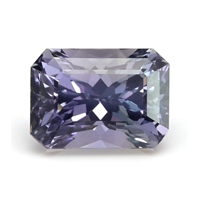


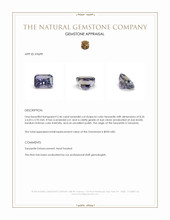
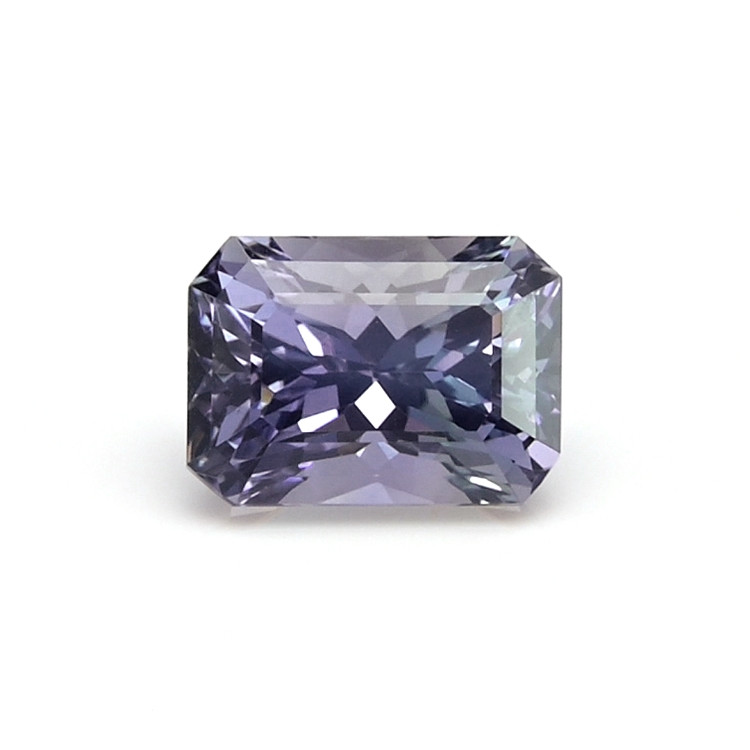
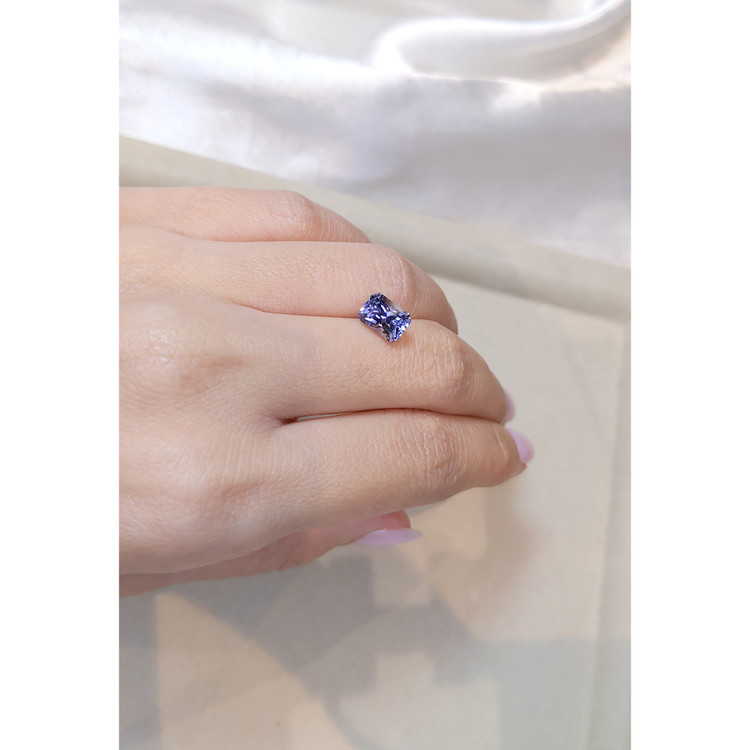

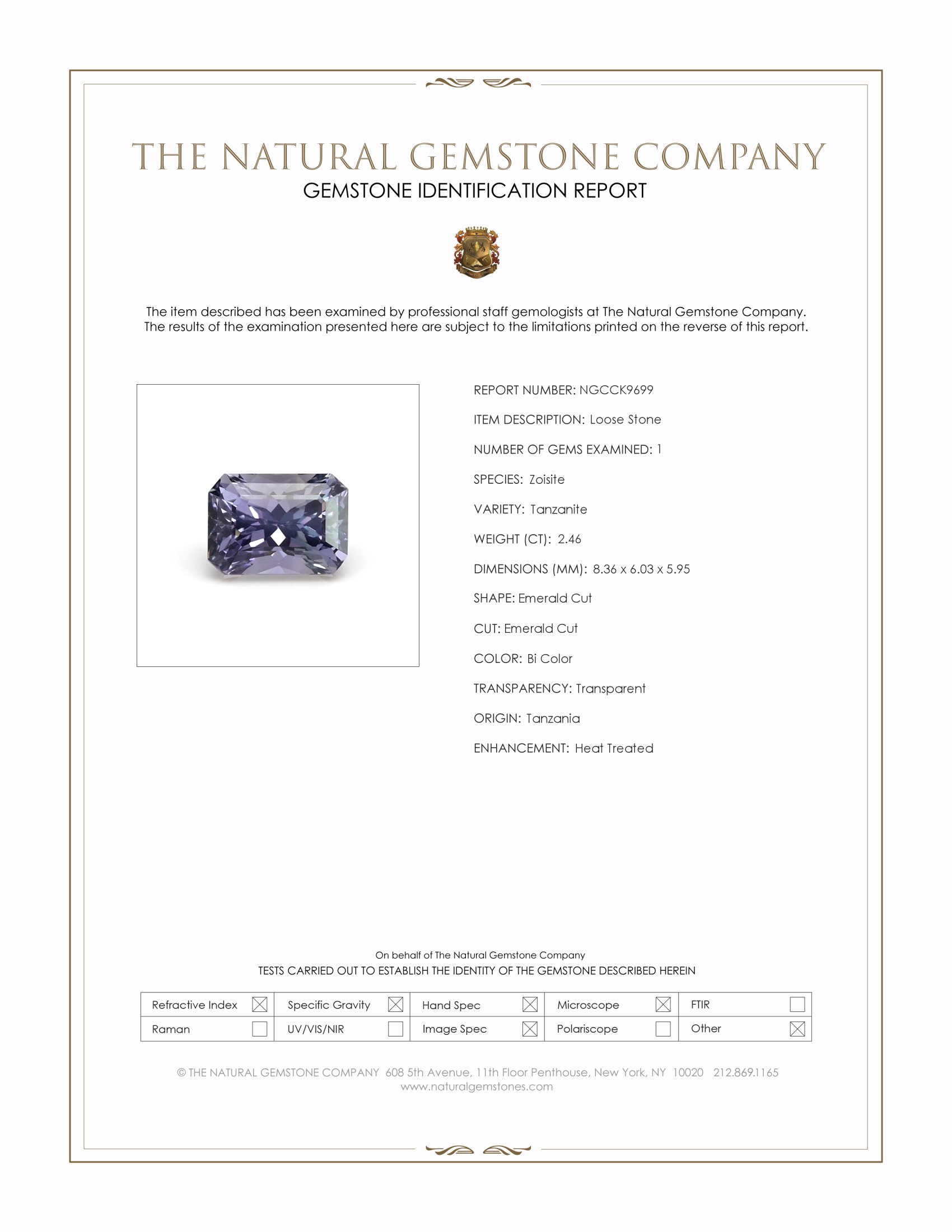
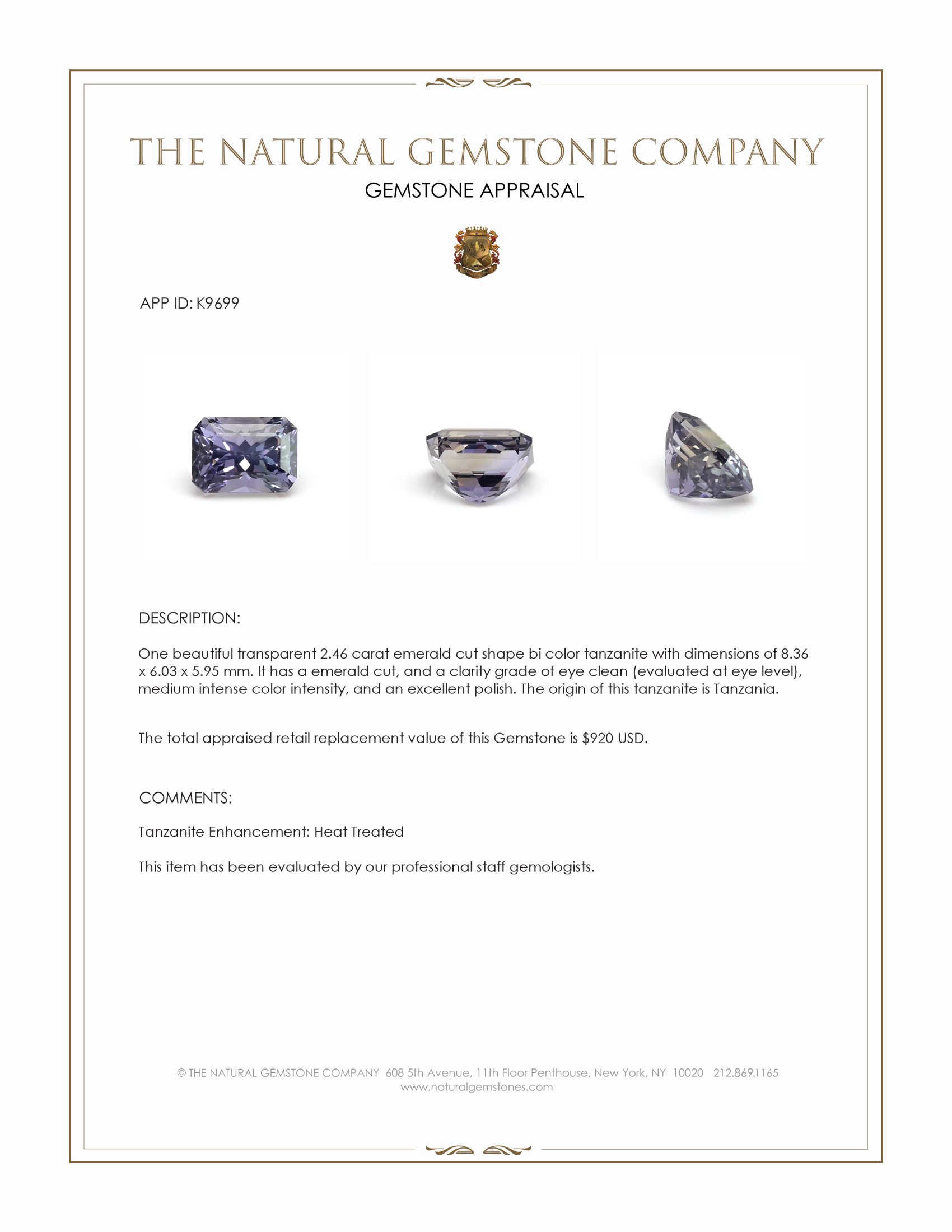
2.46 Ct. Tanzanite from Tanzania
This loose stone ships by Jan 1
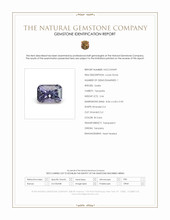
Item ID: | K9699 |
|---|---|
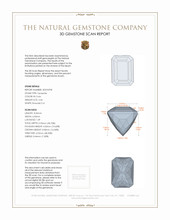
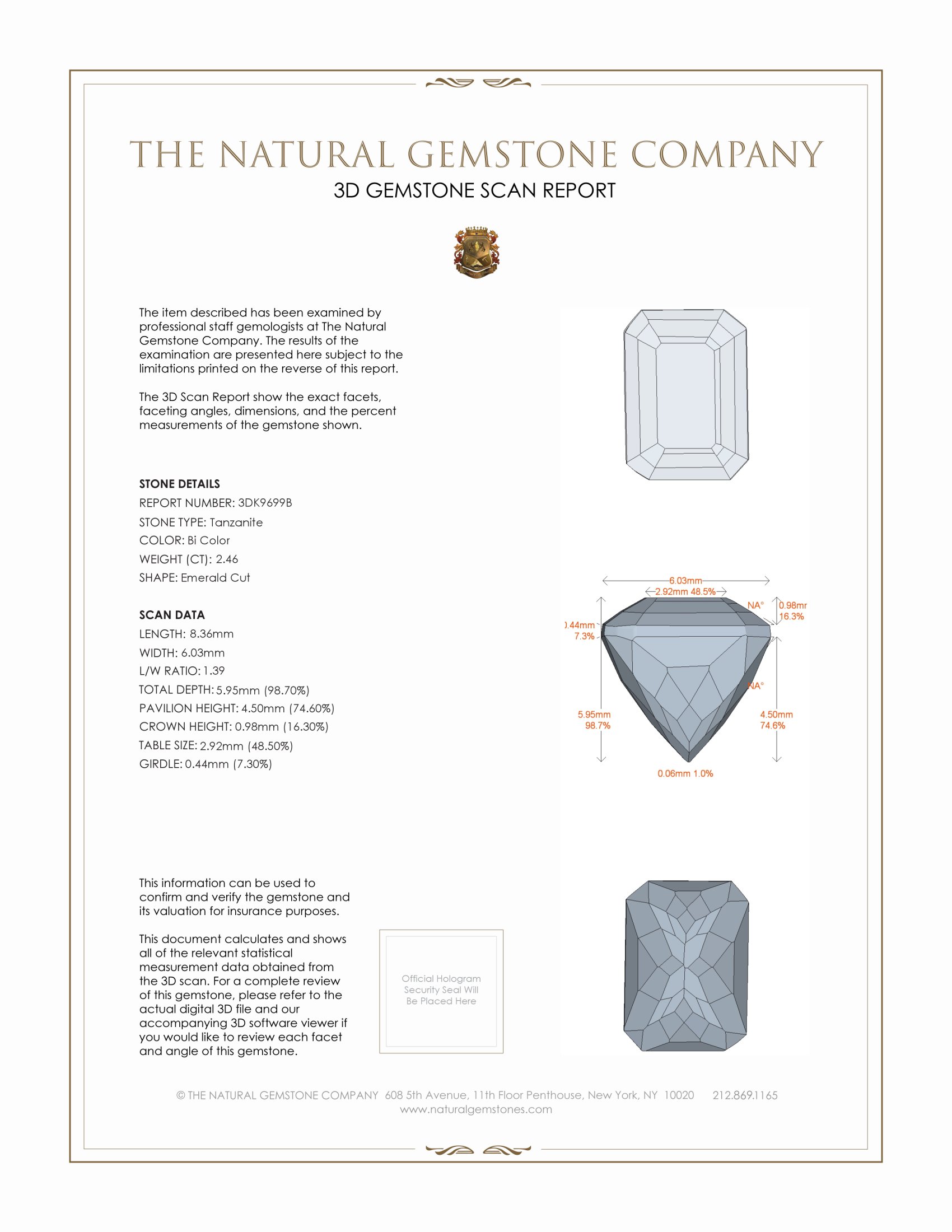
Dimensions (MM): help | Length: 8.36 Width: 6.03 Height: 5.95 |
Weight: | 2.46 Ct. |
Color: help | Bi Color |
Color intensity: help | Medium Intense |
Clarity: help | Eye Clean |
Shape: help | Emerald Cut |
Cut: | Emerald Cut |
Cutting style: | Faceted |
Enhancements: help | Heat Treated |
Origin: help | Tanzania |
Per carat price: help | $374 |
This specimen is a transparent 2.46 carat tanzanite, cut in an elongated emerald shape, with exact dimensions of 8.36 x 6.03 x 5.95 mm. The stone is bi color in appearance, exhibiting a balanced interplay of violet and cooler bluish tones with subtle secondary hues that shift with orientation. The clarity grade is eye clean as evaluated at eye level, which permits unobstructed light travel through the pavilion and crown facets. The color intensity registers as medium intense, providing saturated body color without appearing overly dark in typical lighting situations. The gem has undergone standard heat treatment to optimize the vanadium induced blue violet response, and it originates from Tanzania, the primary source for gem quality tanzanite.
The emerald cut employed for this piece uses a series of broad step facets on both the crown and the pavilion, combined with a large, flat table and trimmed corners to reduce chipping risk. This facet architecture is engineered to emphasize the gem core color and to create broad flashes of light rather than the pinpoint scintillation associated with brilliant cuts. The long rectangular crown facets act as optical windows that concentrate the body color, while the graduated pavilion steps channel light back through the table in planar reflections. Symmetry of facet alignment is critical in a step cut, and this stone demonstrates tightly controlled facet geometry, which produces a regular, mirror like hall of light across the table and step faces.
Because tanzanite is strongly pleochroic, the cutter oriented the pavilion and crown planes to maximize the desirable blue violet axis while preserving the complementary secondary tone for visual complexity. The bi color effect becomes an asset in an emerald cut because the broad step facets reveal zonal color transitions as expansive areas of hue, instead of fragmenting them into small flashes. This cutting strategy intensifies perceived saturation when viewed face up, while allowing controlled color shift when the stone is tilted. The excellent polish enhances these effects by delivering crisp facet junctions and minimal surface diffusion, which increases internal specular reflection and keeps the color planes crisp. With the stone graded as eye clean, inclusions do not interrupt the light paths, so internal reflection patterns remain coherent and the broad flashes produced by the step facets are uninterrupted.
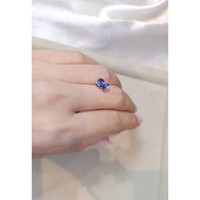
From a craftsmanship perspective, this tanzanite was preformed with deliberate orientation to balance color strength with yield from the rough, then refined with careful step faceting to maintain parallelism and even step widths. The chosen proportions create a pleasing table size that supports both color saturation and structural stability, and the depth distribution favors a controlled light return that enhances the bi color characteristics rather than allowing excessive leakage. The heat treatment applied prior to final polishing stabilizes the blue violet axis, enabling the cutter to rely on consistent pleochroic behavior during facet planning. For setting considerations, the emerald cut profile and trimmed corners lend themselves to secure bezel or four prong settings that protect the girdle while showcasing the table and color planes. This piece is ideal for clients who prefer a refined, architectural aesthetic and who appreciate the way controlled step faceting reveals color complexity.
At The Natural Gemstone Company we prioritize facet precision and optical planning when selecting and finishing tanzanite, and this 2.46 carat emerald cut bi color specimen exemplifies that approach. The combination of eye clean clarity, excellent polish, and the cutter s orientation that takes advantage of pleochroism results in a gem that displays broad luminous planes, balanced color saturation, and crisp light return. For connoisseurs who value technical quality, this stone offers a clear demonstration of how controlled proportions and step facet geometry can enhance a tanzanite s inherent light reflective properties, delivering a piece that performs predictably under inspection and in daily wear.


